
AI Chatbots vs Traditional Customer Support: What’s Better?
Discover the differences between AI chatbots and traditional customer support and learn why combining AI automation with human agents can deliver a better customer experience
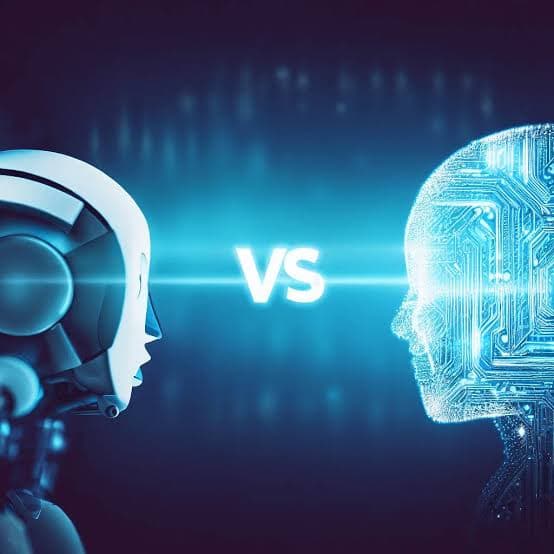
AI Chatbots vs Traditional Customer Support: What’s Better?
Customer expectations are changing rapidly. People want quick answers, 24/7 availability, and seamless support across digital channels. Traditional customer support has served businesses for years, but AI-powered chatbots are changing how companies handle customer conversations.
So, which is better: AI chatbots or traditional customer support?
The answer depends on the type of support your business needs. In many cases, the best approach is not choosing one over the other, but combining AI automation with human expertise.
What Is Traditional Customer Support?
Traditional customer support relies primarily on human agents to communicate with customers through channels such as phone calls, email, live chat, and social media.
A customer contacts the support team, an agent understands the issue, searches for the required information, and provides a response.
Advantages of Traditional Customer Support
Personalized conversations
Better handling of complex or sensitive issues
Human empathy and understanding
Ability to make decisions based on context
Suitable for complaints and unusual situations
However, traditional support can become difficult to scale as customer volume increases.
Businesses may need more agents, longer working hours, and larger support teams to maintain response times.
What Is an AI Chatbot?
An AI chatbot is software that uses artificial intelligence to communicate with customers through conversational interfaces.
Instead of waiting for an agent, customers can ask questions and receive automated responses instantly.
AI chatbots can handle tasks such as:
Answering frequently asked questions
Collecting customer information
Qualifying leads
Checking order or ticket information
Guiding users through processes
Booking appointments
Routing conversations to the right team
Providing support outside business hours
This allows businesses to automate repetitive conversations while allowing human agents to focus on more complex issues.
AI Chatbots vs Traditional Customer Support
| Feature | AI Chatbots | Traditional Support |
|---|---|---|
| Availability | 24/7 | Usually limited by working hours |
| Response time | Instant | Depends on agent availability |
| Scalability | Very high | Requires additional staff |
| Repetitive queries | Excellent | Time-consuming |
| Complex problems | Limited | Excellent |
| Human empathy | Limited | Strong |
| Cost at scale | Lower | Higher |
| Personalization | AI-driven | Human-driven |
| Large query volumes | Easy to handle | Can create queues |
| Human intervention | Available when needed | Always required |
1. Response Time
One of the biggest advantages of AI chatbots is speed.
A chatbot can respond to multiple customers simultaneously without placing them in a queue. This is particularly useful for businesses that receive a large number of repetitive questions.
Traditional support may require customers to wait until an agent becomes available.
For simple questions, an instant automated response can significantly improve the customer experience.
2. Availability
Human support teams usually operate according to working hours and staff availability.
AI chatbots can operate 24/7.
Customers can ask questions at night, during weekends, or on holidays and still receive immediate assistance.
This makes AI chatbots particularly useful for businesses serving customers across different time zones.
3. Scalability
Imagine a business receiving 100 customer conversations per day and suddenly growing to 1,000 conversations per day.
With traditional support, the company may need to hire additional agents.
An AI chatbot can handle a much larger number of conversations simultaneously.
This makes automation especially valuable for growing businesses.
4. Handling Repetitive Questions
Customer support teams often spend a significant amount of time answering the same questions repeatedly.
Examples include:
What are your business hours?
How can I reset my password?
Where is my order?
What is your refund policy?
How can I contact support?
What services do you provide?
These conversations are excellent candidates for automation.
AI chatbots can provide immediate answers while allowing human agents to spend more time solving complicated customer problems.
5. Handling Complex Problems
This is where human support still has a major advantage.
Some customer issues require:
Human judgment
Emotional understanding
Detailed investigation
Exception handling
Negotiation
Complex decision-making
For these situations, transferring the conversation to a human agent is often the best option.
A well-designed AI chatbot should therefore know when to stop automating and involve a human.
6. Cost Efficiency
Hiring and training a large customer support team can become expensive as a business grows.
AI chatbots can automate a significant portion of repetitive support interactions.
This does not necessarily mean replacing the entire support team.
Instead, businesses can use AI to reduce repetitive workload and allow human agents to concentrate on higher-value conversations.
7. Customer Experience
The best customer experience often comes from combining automation with human support.
For example:
Customer → AI Chatbot → Information/Resolution → Human Agent if Required
The chatbot can handle the initial conversation, collect relevant information, and understand the customer's request.
If the issue is complex, the conversation can be handed over to a human agent with the necessary context.
This creates a faster and more efficient support experience.
So, Which One Is Better?
There is no universal winner.
Choose AI chatbots when you need:
24/7 customer support
Instant responses
Automated FAQs
Lead qualification
High-volume conversation handling
Reduced repetitive workload
Scalable customer support
Choose human support when you need:
Complex problem solving
Emotional support
Negotiation
Sensitive conversations
Manual investigation
Human decision-making
The Best Solution: AI + Human Support
Instead of treating AI chatbots and human agents as competitors, businesses should use them together.
AI can handle the repetitive and predictable parts of customer support, while human agents handle conversations that require experience, empathy, and judgment.
This approach creates a support system where:
AI handles speed and scale.
Humans handle complexity and empathy.
Final Thoughts
AI chatbots are transforming customer support by making conversations faster, more scalable, and available around the clock.
However, human agents remain essential for complex and sensitive customer interactions.
The future of customer support is not necessarily AI vs humans.
It is AI + humans.
Businesses that combine intelligent automation with human expertise can provide faster responses while still maintaining the personal touch customers expect.
With platforms like B6AI, businesses can automate customer conversations, manage AI-powered interactions, and connect customers with human agents when additional support is required.
The goal isn't to remove humans from customer support.
The goal is to help humans spend less time on repetitive questions and more time solving problems that actually need them.
Tags
- #ai